
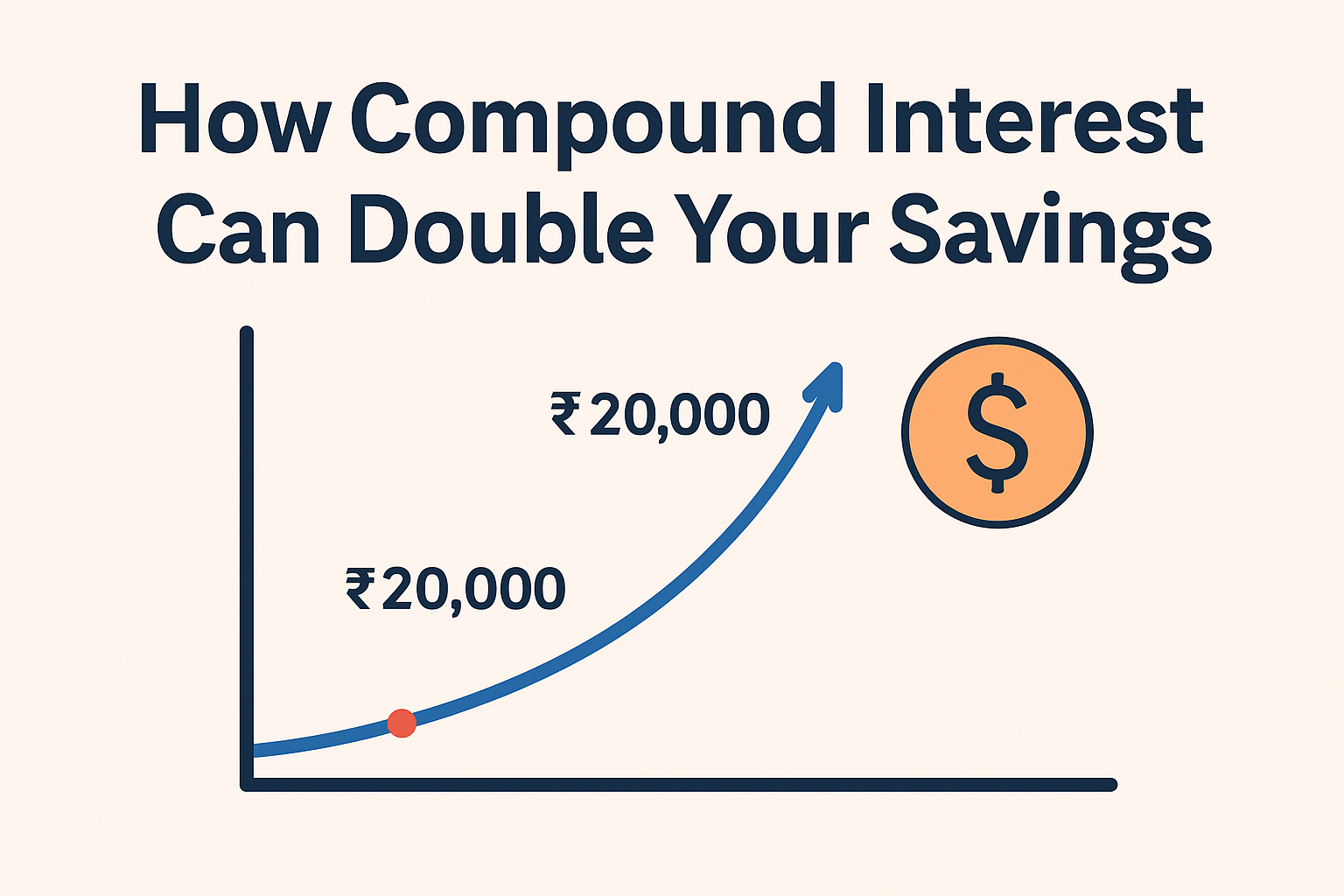
When it comes to growing your money, compound interest is one of the most powerful forces in finance. It’s often called the “eighth wonder of the world” — because, with time and consistency, it can double or even multiply your savings many times over.
Let’s understand what compound interest really means and how it can help you build long-term wealth.
What Is Compound Interest?
Compound interest means earning interest on both your original money (called the principal) and the interest your money has already earned.
In simple words — your money starts making more money, and then that money earns even more!
Example:
If you invest ₹10,000 at 10% annual interest:
- After 1 year, you’ll have ₹11,000.
- After the 2nd year, you’ll earn 10% not just on ₹10,000, but on ₹11,000 — which becomes ₹12,100.
- After 8 years, your ₹10,000 will grow to around ₹21,400.
This steady growth shows how your savings can double through the power of compounding.
Simple Interest vs. Compound Interest
The main difference is simple:
- Simple interest gives you returns only on your original deposit.
- Compound interest gives you returns on both your deposit and previously earned interest.
So, while simple interest grows in a straight line, compound interest grows exponentially. Over time, the difference becomes massive — especially when you stay invested for many years.
The Rule of 72: The Shortcut to Doubling Your Money
There’s a quick and easy formula to know how long it will take for your money to double — called the Rule of 72.
Just divide 72 by your interest rate, and you’ll get an approximate number of years it takes for your money to double.
For example:
- At an interest rate of 6%, your money doubles in about 12 years (72 ÷ 6).
- At 10%, your money doubles in about 7 years (72 ÷ 10).
This rule helps you quickly estimate how powerful compounding can be, even with moderate returns.
Why Time Is the Secret Ingredient
The most important factor in compounding is time. The earlier you start, the more your money can grow.
Imagine two friends:
- Rahul starts investing ₹5,000 a month at age 25.
- Rohit starts investing the same amount at age 35.
By age 55, Rahul could have around ₹1.5 crore, while Rohit might have only ₹60 lakh — even though they both invested the same amount monthly.
The difference? Rahul started 10 years earlier, giving compound interest more time to work its magic.
How to Make the Most of Compound Interest
Here’s how you can take full advantage of compounding:
- Start Early: The earlier you begin, the more time your money has to grow.
- Invest Regularly: Stay consistent through monthly SIPs or recurring deposits.
- Reinvest Your Earnings: Avoid withdrawing your returns; let them generate more income.
- Be Patient: Compounding takes time — the longer you wait, the greater the results.
- Choose Good Returns: Opt for investments that offer decent interest rates with manageable risk.
Real-World Example
Let’s say you invest ₹1 lakh at a 10% annual compound interest rate:
- After 7 years, it will grow to about ₹2 lakh — your money has doubled.
- After 14 years, it becomes around ₹4 lakh.
- After 21 years, it reaches roughly ₹8 lakh.
This example shows that compounding doesn’t just double your money — it continues multiplying it the longer you stay invested.
Final Thoughts
Compound interest is not just a concept — it’s a wealth-building mindset. It rewards discipline, patience, and consistency. The sooner you start saving and investing, the sooner you can let compounding work for you.
Whether you’re saving for retirement, education, or financial freedom, remember:
“It’s not about timing the market — it’s about time in the market.”
Start today, and watch your savings grow faster than you ever imagined.